
Rethinking Ocean Communication Through Van Gogh’s Yellow
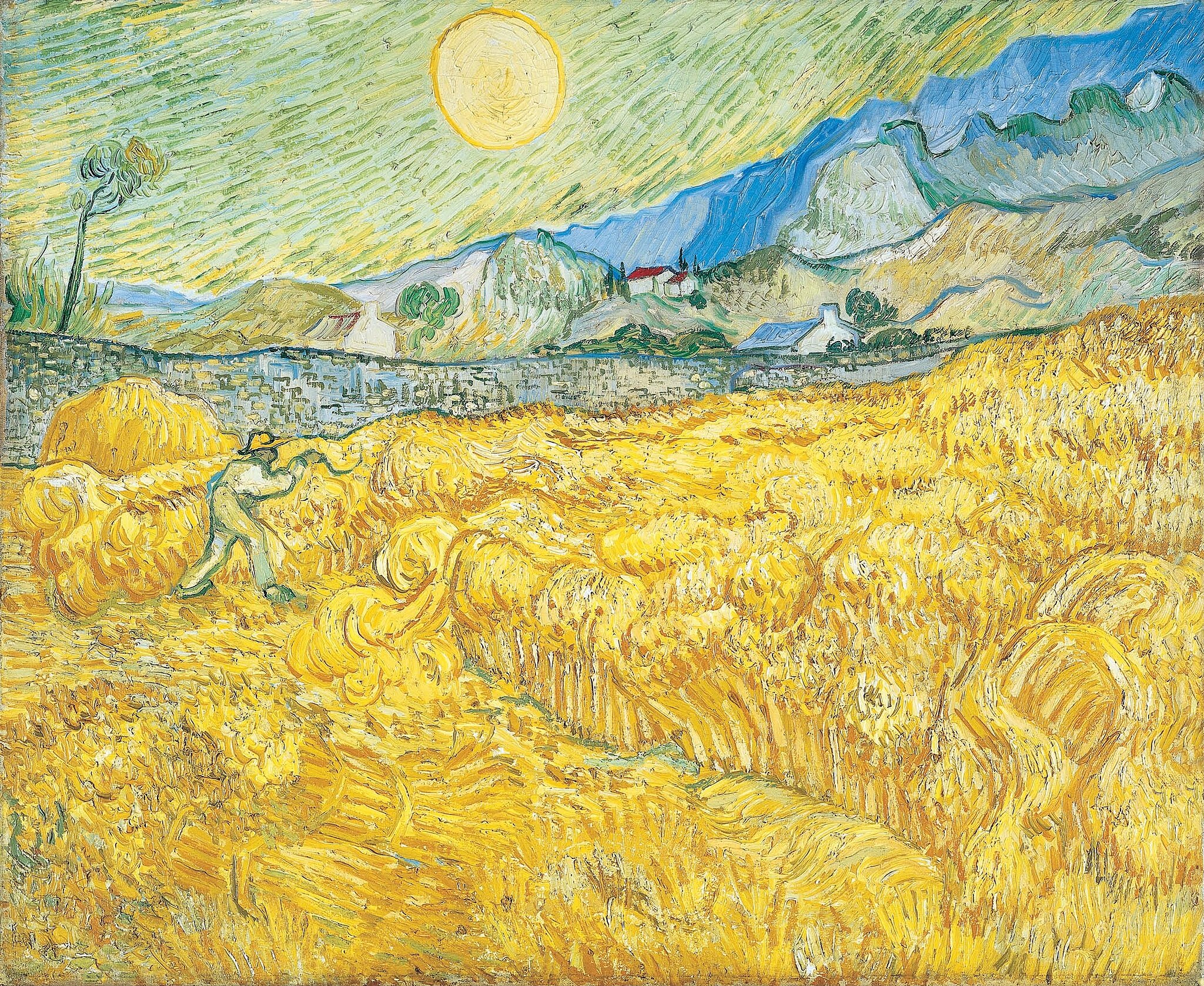
The colour of the moment
The temporary exhibition Yellow – Beyond Van Gogh’s Color in Amsterdam opens with Sunflowers and then moves beyond painting into fashion, music and literature at the end of the nineteenth century. Yellow appears not only as the colour of the sun, but as a carrier of emotion, atmosphere and cultural meaning. Around 1900 it becomes associated with what is modern, daring and, at times, decadent.
This is also a decisive moment in the formation of modern communication. The French yellow novels of the 1880s and 1890s and, in London, The Yellow Book (1894–1897) used colour in a way that made them immediately recognisable in bookshops and on the street. Their covers announced new writing, new aesthetics and new readers in an expanding visual culture. Yellow moved out of the studio and into everyday life, where it became a sign that something new had entered public space.
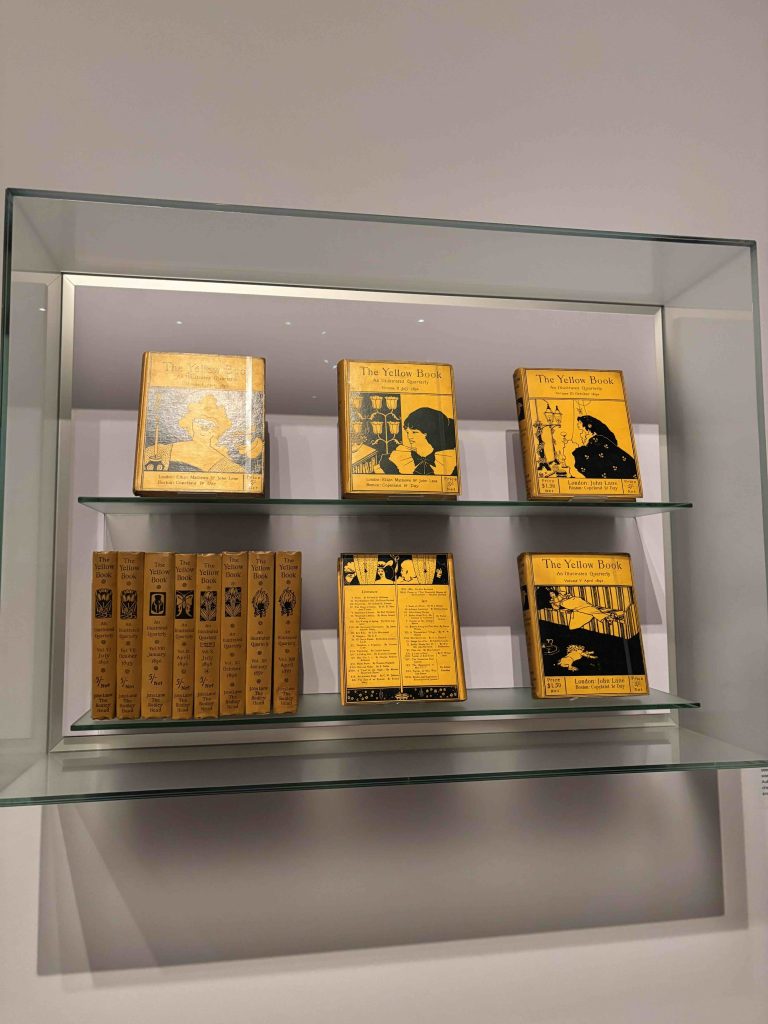
They Yellow Book, 13 volumes (1894-1897)
Yellow and blue
Yellow reaches its full intensity next to blue.
The exhibition returns to this repeatedly in Van Gogh’s work. Blue holds the depth of the sky and the distance of the landscape; yellow brings it forward. The relationship is not decorative. It is what allows the scene to be experienced rather than observed.
In ocean communication, blue has become the natural language of the field in logos, reports, websites and conference stages. It signals science, policy and data and it is, literally, the colour of the sea. It has built legitimacy and it has carried the ocean into public awareness.
That awareness is real. We repeat that every second breath we take comes from the ocean, yet this knowledge rarely translates into an everyday sense of how close it is to our lives. In the Ocean & Society Survey, fewer than one in four people say they think about ocean health on a daily or weekly basis. For most, it remains an occasional concern.
The task for ocean communication is no longer visibility, but intensity – the point at which what is known becomes part of everyday life.
The parallel is practical rather than visual. Around 1900, yellow did not replace existing forms of communication; it made what was new recognisable in public space.
Ocean communication has made the ocean visible as an issue.
The next step is to make it part of everyday life. That means in food systems, climate risk, urban planning, infrastructure finance and economic value.
Not more awareness, but everyday integration.
Where visibility becomes action
In the exhibition’s installation Color Experiment No. 78, Olafur Eliasson approaches the colour in similar terms — as a way of expanding what we are able to register and respond to.
As he notes:
“Yellow has the incredible history of somehow seeming to offer more than you would normally see. The colour yellow is hospitable to your ability to believe in the consequences of seeing more than what is just there.”
For ocean communication, this is a familiar gap. The ocean is widely recognised as essential for life, yet it is still rarely part of how everyday priorities are formed and decisions are made.
Eliasson’s emphasis is not on visibility alone, but on consequence, the point at which what is seen is understood to matter and begins to create urgency.
The shift is practical. Not more explanation, but a different proximity: connecting what happens beneath the surface with food, risk, infrastructure, investment and value.
Yellow, in this context, is not a contrast to blue.
It is what allows it to be seen.
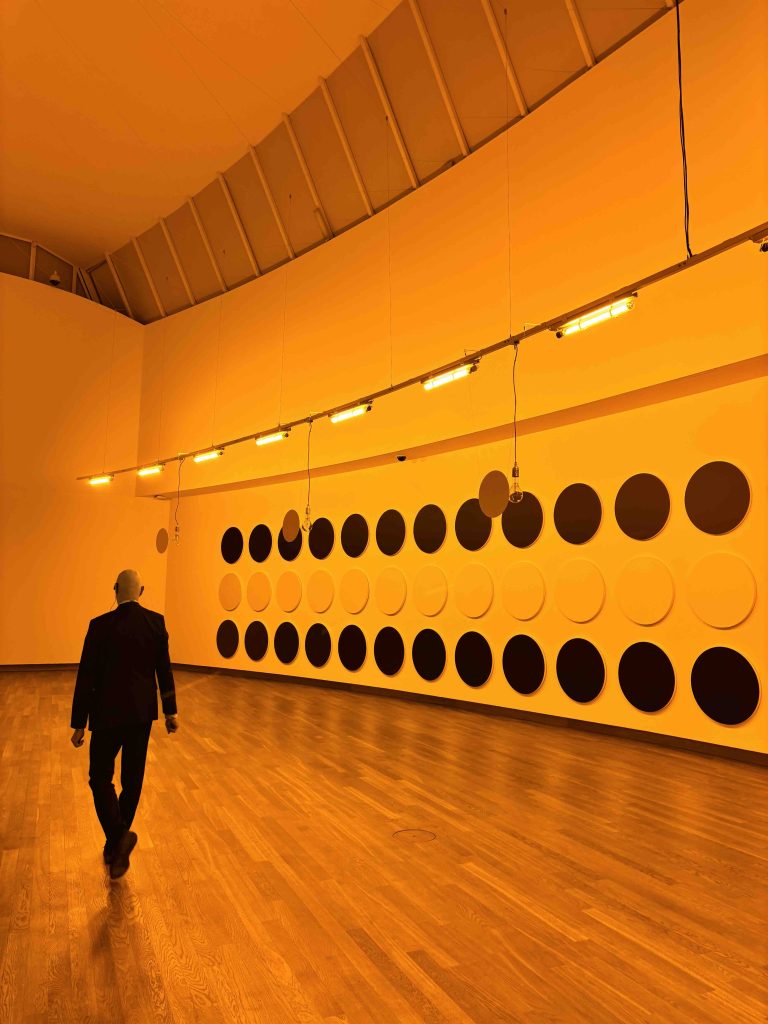
Color Experiment No. 78, Olafur Eliasson