How Yachting Can Support Ocean Knowledge and Protection
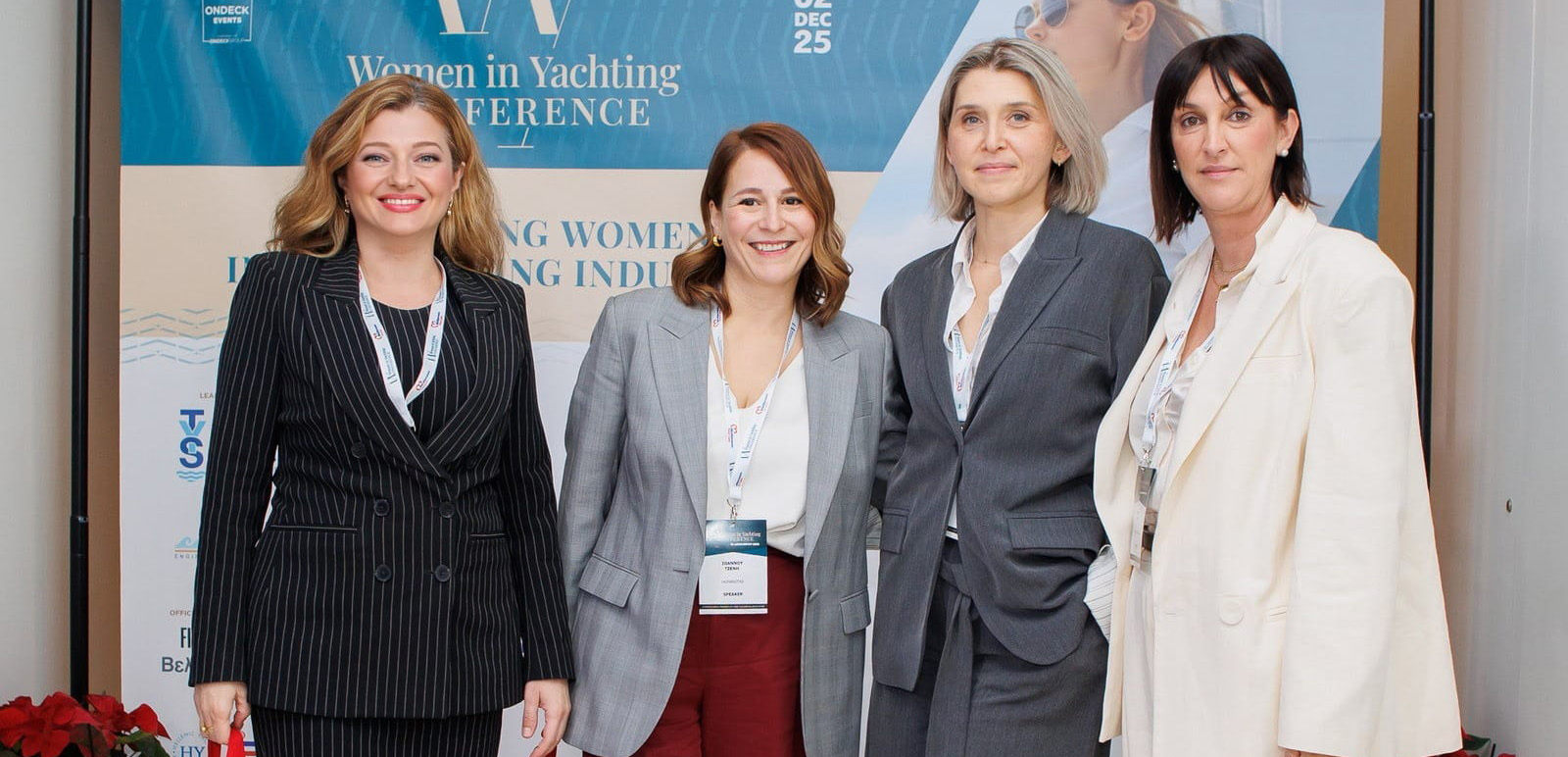
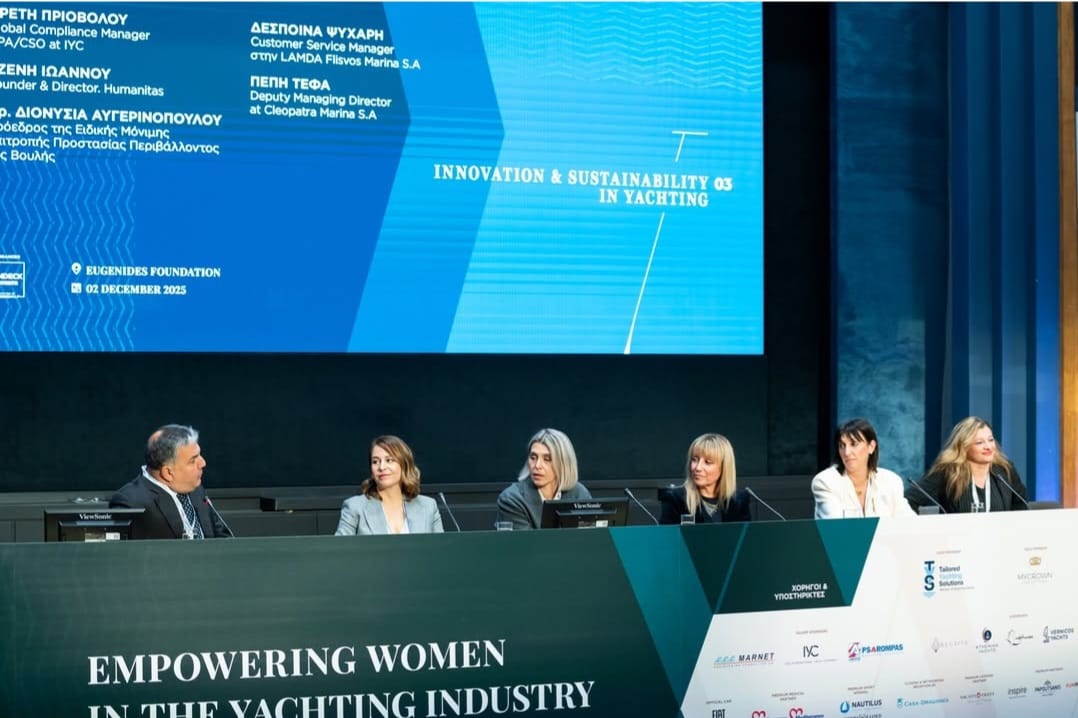
At the Women in Yachting conference in Athens on December 2nd — organised by OnDeck Events, I joined a panel alongside Dr Dionysia Avgerinopoulou (Chair of the Hellenic Parliament’s Special Environmental Committee), Areti Priovolou (Global Compliance Manager, IYC), Despina Psychari (Customer Service Manager, Lamda Flisvos Marina) and Pepi Tefa (Deputy Managing Director, Cleopatra Marina). My contribution focused on how yachting can grow into two additional roles, beyond recreation — as an observer and as a protector — and how each of these can support ocean knowledge and marine ecosystems.
These roles are not abstract; they are entirely within reach if the sector chooses to activate them.
1. Yachting as an Observation Network
Yachting moves through areas where scientific monitoring is sparse. That position, by itself, makes the fleet valuable.
I highlighted SOOP — Shaping an Ocean of Possibilities, an initiative of the Helmholtz association (GEOMAR, AWI, Hereon). Its logic is simple:
- vessels that are not research ships can still collect meaningful ocean data
- sensors are compact, affordable and designed for non-specialists
- every route becomes a data route
- the resulting datasets are uploaded to EDITO, Europe’s new ocean data lake
This is directly relevant to our own work.
In the EMODnet Open Sea Lab 4.0 hackathon, our team’s project, Smoke on the Water, examined how wildfire events affect the marine environment. EDITO, as a unified data lake, provided the integrated environment that allowed us to explore these interactions and understand how vessel-generated datasets — such as those contributed through SOOP — could support future modelling.
2. Behaviour as a Sustainability Mechanism
From the Seal Greece campaign — 1,000 miles, 26 islands — one finding was consistent: People do not resist responsible boating; they simply lack the context that triggers it. Once crews and guests understand how noise, distance or anchoring disturb wildlife, behaviour shifts. Skippers amplify this shift: their choices become the behavioural template onboard, making behaviour one of the most immediate ways for yachting to fulfil its role in protection.
3. A Cradle-to-Cradle Way of Thinking
I referenced Cradle to Cradle, the design philosophy developed by William McDonough and Michael Braungart, which begins by considering the end of a material’s life cycle and designing in ways that minimise what is left behind. I used this not in its technical sense, but as a metaphor: even if an experience like yachting cannot circulate in continuous cycles, it can still be approached with an awareness of its “afterlife” — what remains once we move through an ecosystem.
4. Other Voices Shaping the Conversation
It was valuable to hear contributions that expanded the discussion beyond our panel and highlighted the range of experience represented at the event — from charter professionals and marina managers to athletes and women who engage with the sea through different roles and disciplines. The variety underscored a simple point: innovation in yachting is informed by many types of practice, not a single perspective.
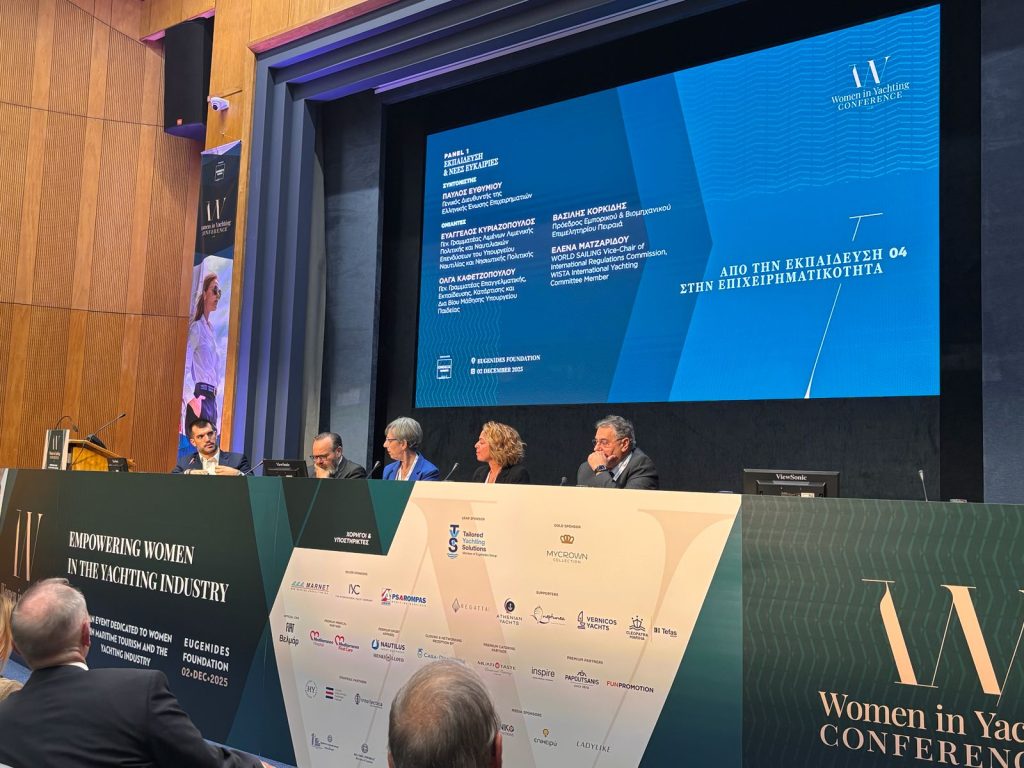
The World Sailing Vice-Chair of International Regulations Commission
- Elena Matzaridou, the Vice Chair of the World Sailing International Regulations Commission and member of the WISTA International Yachting Committee, when asked whether entrepreneurship can be taught, drew parallels between seafarers and entrepreneurs: both operate under risk, time pressure and uncertainty, conditions that shape the strategic thinking and resilience needed to steer maritime transition. She added that the sea and the yacht serve as a living, experiential laboratory of entrepreneurship, cultivating the very attributes leaders need: decision-making under pressure, risk management, adaptability and teamwork. And any meaningful future strategy, she noted, must include strategic investment in human capital.
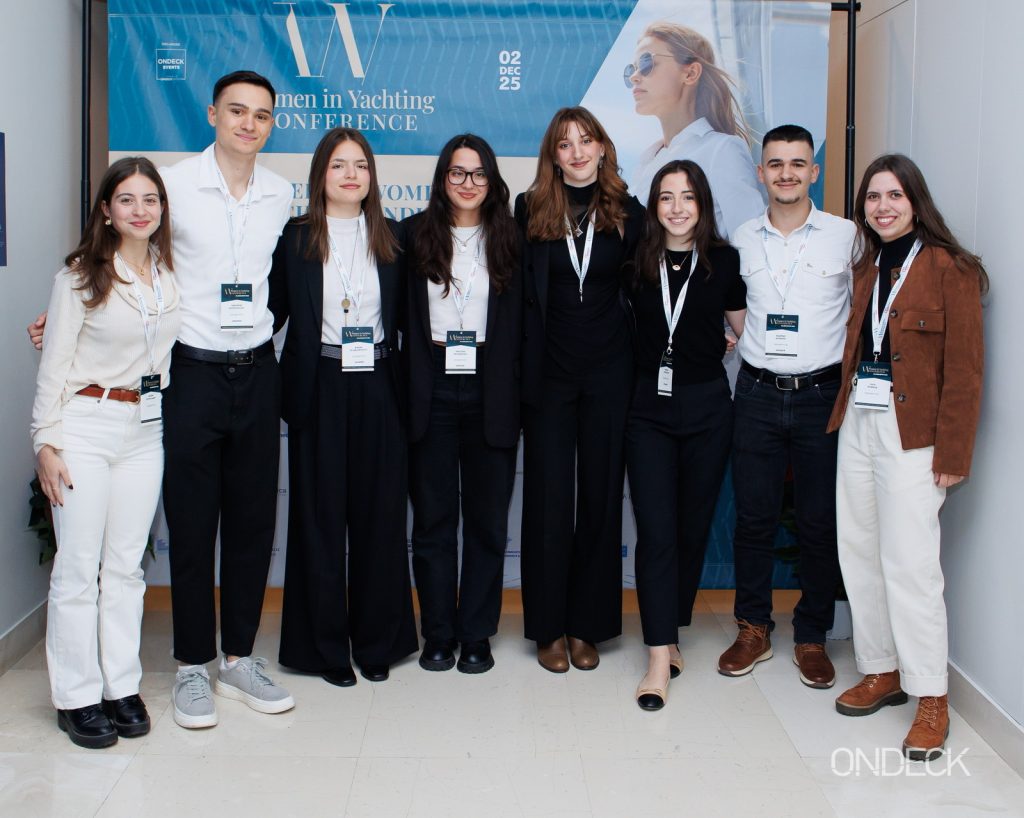
OCEANOS NTUA TEAM
- OCEANOS NTUA, whose students design solar and electric vessels for international clean-maritime competitions, offering a clear view of where the next generation of marine engineers is heading. Their work demonstrates how academic programmes can function as early innovation incubators, translating technical curiosity into applied maritime solutions.
What stood out overall was how clearly the sector already holds the ingredients for both innovation and sustainability: a space for recreation, a presence for observation and a responsibility for protection. Progress will come not from reinventing yachting but from activating this potential in ways that help safeguard the fragile seas the sector depends on.
Jenny Ioannou is the founder and director of Humanitas, an impact driven communications agency focused on public awareness campaigns and projects at the intersection of ocean protection and science. She also serves as communications manager at lomarlabs, a maritime innovation venture catalyst.